Through centuries of struggle and triumph, the songs of our faith have carried us. In recognition of June as Black Music Appreciation Month, we listen, we remember, we worship.
Released almost 30 years ago, the gospel song “I Do Worship” by John P. Kee, from his album Strength, became part of the DNA of Black worship, its voice rising from a long tradition of hymns and spirituals, echoing themes of praise, holiness, and gratitude that have carried generations.
Its phrases—“I do worship,” “I do adore,” and gratitude “for your goodness and your glory”—rang through sanctuaries as both confession and celebration. Even before the choir began, the words carried weight: a reminder that worship is not mere ritual, but a lifeline. From this music, we step into a story centuries in the making—a story of faith, resilience, and sacred spaces that have always held us.
Long before holistic care or mental health were words we used, the Black church tended our spirits, fed our bodies, and restored our sense of worth. It has been, and still is, a place where the soul can exhale and remember that it is sacred. It offers sanctuary amid political turmoil, economic strain, and the weight of daily life, carrying generations through storms that would have otherwise left them unmoored.
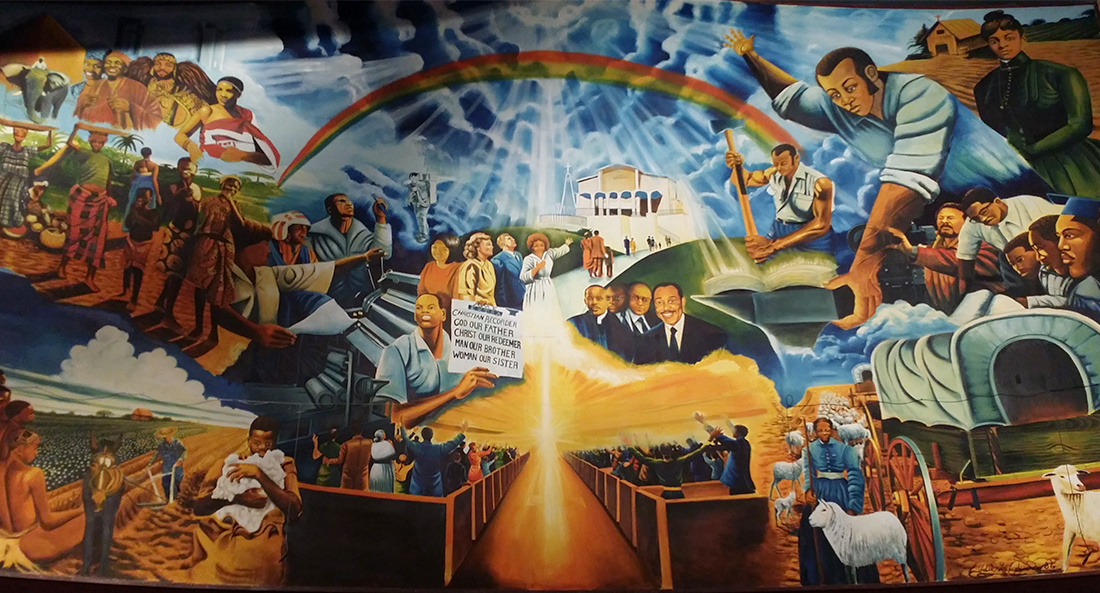
For centuries, the Black church has been more than a building. From hidden brush arbors to modern-day sanctuaries, it has been a place where weary souls gather, open their hands, and whisper—sometimes boldly, sometimes trembling—“I do worship.” It is where faith is shaped, grief is shared, hope is renewed, and strength is gathered.
We come carrying joy, grief, questions, and hope. The choir begins, and the room expands. The song moves through us. “I do worship” becomes a whisper, then a chorus, carrying strength we didn’t know we had. We lift our eyes and offer thanks “for your goodness and your glory,” even when the days are heavy and nights long. And when the choir sings “holy,” the word breaks open like light—a reminder, a revelation, a returning. It signals that there is something sacred in surviving what tried to break us, in loving even when love costs, in gathering when the world pushes us apart, and in refusing to let our spirits run dry in the deserts life keeps delivering.
This is the miracle of worship: that the same simple words—“I do adore,” “I do worship”—can mend what the week has broken, even if only for a moment. They are more than words set to music; they are memory, medicine, and collective prayer. They carry the heartbeat of generations, echoing stories of faith, resilience, and enduring hope.
These spaces and this music are rooted in history.
During slavery, worship was an act of rebellion. Enslaved people gathered secretly, lifting praises that affirmed humanity in a world intent on denying it.
Through Jim Crow and segregation, the church became a school, a community center, a strategy room, and a refuge. Worship restored dignity.
During the Civil Rights Movement, the Black church became a headquarters. Spiritual songs strengthened marchers facing dogs, fire hoses, and hatred.
And even today, the church continues to be a space to breathe, to heal, to reconnect—with God, with community, and with self.
The Black church continues to evolve, but its heart remains steadfast. It calls us back to the truth that no matter what we face, we are not alone. It anchors us in a presence that is unwavering and holy, reminding us that praise itself is an act of courage.
And even now—almost 30 years later—the declaration still rises from our lips and our lives:
“We do worship.
We do adore.
We do endure”
About the Authors
Brian Floyd is an Assistant Dean in the School of Health and a faculty member at the Capital Applied Learning Lab at Georgetown University. Roberto Terrell Jr. is a research assistant and psychology and economics major in the College of Arts and Sciences at Georgetown University.
Together, they form Rhythms, Verses & Reflections, an intergenerational collaboration using verse, narrative, and memory to illuminate life, culture, and community care. Their work centers storytelling as a bridge across generations, preserving and amplifying voices often left unheard.